How Long Does IV Therapy Last?
How Long Does IV Therapy Last?
December 4, 2025 • 7 min read
For anyone considering IV drips to boost wellness, a key question asked is – How long do the benefits of IV therapy actually last? Understanding this is key to determining the best IV drip for your needs and whether or not an IV drip is in your best interest altogether. In this article,we break down what IV therapy is, how quickly it works, and how long IV therapy lasts in your body with tips to help extend the benefits.
New to IV treatments? Be sure to check out our comprehensive IV Therapy Guide for a complete overview of IV therapy benefits, risks, and how it works before diving into the details below.
What is IV Therapy?
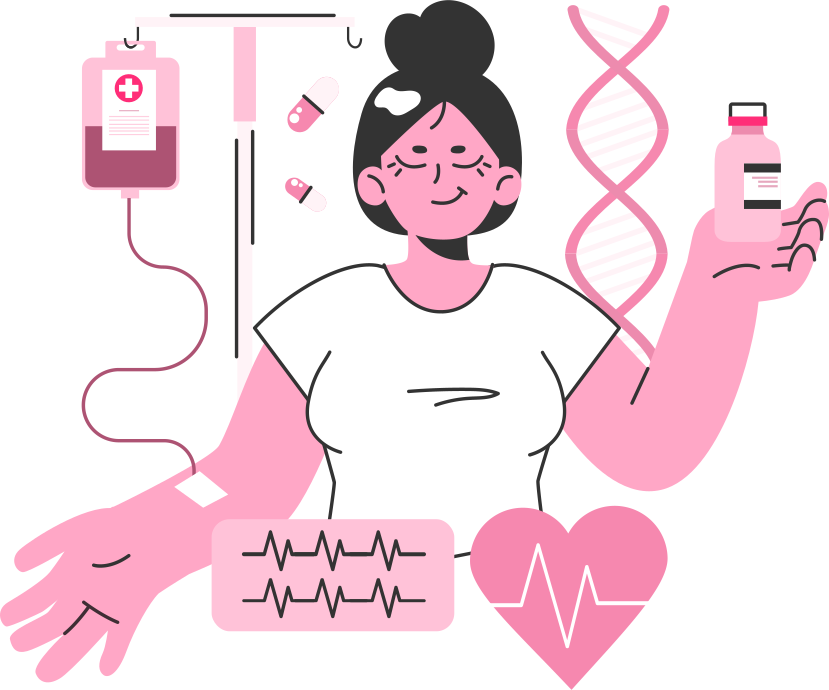
Intravenous therapy (IV therapy) is a medical process for delivering fluids, medications or nutrients directly into the bloodstream through a vein. This allows saline fluids, vitamins, minerals, or medications to bypass the digestive system and go straight into circulation, allowing the body to rapidly absorb and rehydrate quicker than any other form of substance delivery. IV therapy is commony used in hospitals for patients who need medications or fluids rapidly, but has propagated to the general public for things like hydration therapy, vitamin infusions, and hangover relief.
IV therapy is generally safe and common procedure done by trained professionals with a low risk of complications. Now lets get to the main question: how long does an IV therapy session take and how long do the effects last?
How Long Does IV Therapy Take? (Typical Duration)
Most IV therapy sessions last about 30-60 minutes, with most of the variation in time due too differences in operator procedure. IV drips are relatively quick and can often be done during a lunch break or a short appointment, of course the exact duration can vary depending on the type of IV and your individual needs - generally, they are designed to deliver benefits fast, which is part of the appeal.
Some infusions can be quite speedy. For example, an IV iron infusion (common medical treatment) can be completed in as little as 15-30 minutes for a standard dose.
Some infusions, like an NAD+ infusion can take up to 8 hours depending on the dosage being infused. This is because NAD+ infusions can be extremely uncomfortable if infused too quickly and needs a licensed provider to stand by and keep a close eye on the infusion rate.
Typically, standard IV therapy sessions rarely exceed 90 minutes, so even longer non-NAD infusions are usually under two hours.
What to Expect During an IV Therapy Session
It helps to know what happens during that 30–60 minute session. Here’s what a typical IV therapy visit looks like:
- Setup (5–15 minutes): A healthcare professional (usually an RN) will sit you in a comfortable chaire, clean the area in your arm, and insert a small IV needle. They connect this to tubing and a bag of IV fluid. This can be pretty fast, and in an experienced provider, it should only take a few minutes to get the IV line in place.
- Infusion (15–60+ minutes): The fluid or vitamin cocktail is started, and during this time, all you do is sit back and relax while the solution flows. The nure monitors the drip rate and your comfort, and will attempt to run the fluid at the maximal tolerated rate. The length of infusion can vary depending on how much total fluid is infused, but a basic popular wellness IV like a Myer's Cocktail typically takes around 45 minutes.
- Wrap-up (5 minutes): Once the IV bag is empty or you’ve received the full dose, the provider will remove the IV catheter from your arm and place a small bandage on the site. You’re usually all done at this point. There’s generally no recovery time needed – you can stand up and leave right away unless instructed otherwise.
Plan on your IV therapy appointment taking roughly one hour. While the actual drip may only be part of that time, there is usually a few minutes allocated to setup and wrap-up. If you are in a hurry, you can let the staff know, and can use a pressure bag to speed up the rate of infusion past what gravity would typically allow.
Factors That Affect IV Therapy Duration
Several factors can influence how long your IV therapy takes:
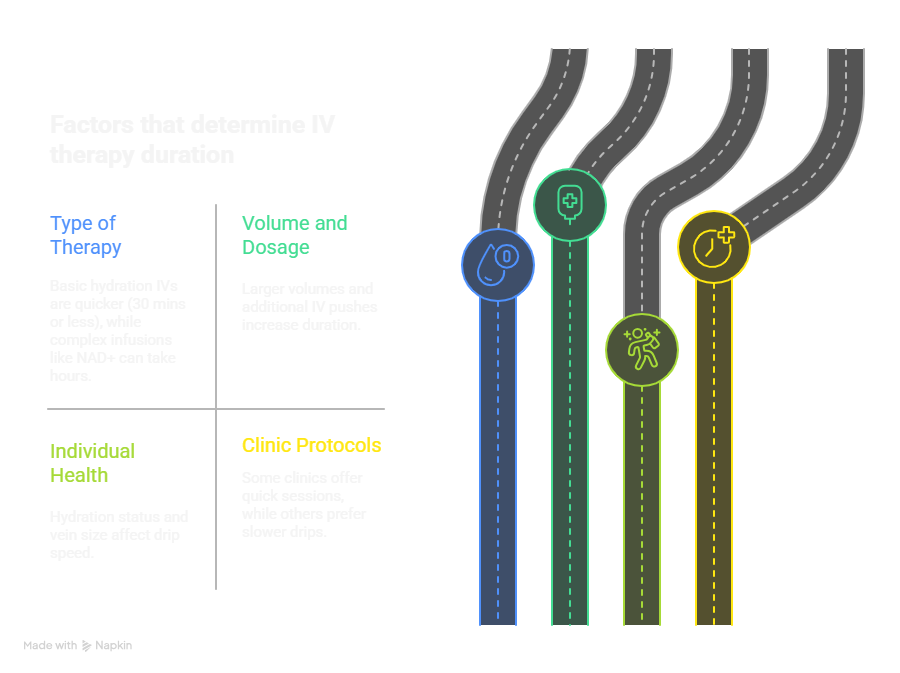
- Type of IV Therapy: The contents of the IV infusino play abig role. A straightforward hydration IV usually runs quicker (often 30 minutes or less) because it's just fluids for rehydration. Vitamins or mineral infusions might take longer (around 45-60 minutes) since they sometimes involve larger volumes or thicker solutions. Some treatments like NAD+ need to be infused very slowly and can take several hours. As a rule of thumb, basic treatments tend to be faster while more complex treatments take longer.
- Volume and Dosage: The amount of fluid in the IV bag matters. Larger volumes naturally take longer. There can also be small "IV push" of vitamins or medications done before or after the main drip, which can influence the time it takes for the whole procedure to finish.
- Individual Health and Vein Factors: Every person is a little different. Your hydration status, vein size, and overall health can affect drip speed. If you’re very dehydrated, sometimes the veins are a bit harder to access or the body might initially take up fluids more cautiously. Poor vein access might require a slower drip or a little extra time to get the IV started. Conversely, being well-hydrated and relaxed can make the process smoother. Some people may also be able to take larger volumes of fluid in a shorter amount of time depending on their circulatory structure. Each person is different, and the nurse will adjust the rate of infusion to ensure maximal comfort.
- Clinic Protocols: Different clinics have different practices. Some clinics advertise quick “15-minute IV sessions” by using smaller bags or faster drip rates, while others prefer a slower drip to let you relax and ensure no lightheadedness. There’s also sometimes paperwork or consultation at your first visit (discussing your goals, signing consent forms) which can add a few minutes, though the IV drip itself isn’t affected. If it’s your first time, you might spend a little longer with introductions and questions, whereas repeat sessions might go quicker since you know the drill.
How Quickly Will I Feel the Effects?
People love IV therapy because it works fast. Most patients report feeling a difference within minutes of the infusion starting, and can feel the full effects shortly after completing the IV.
Keep in mind however, that your mileage may vary. If you came in with severe dehydration and fatigue, you will likely feel the effects instantaneously. If you're looking for a long term immunity boost, the effects may be more subtle, taking time to work on a cellular level.
In cases of illness or significant dehydration, IV therapy can be a real pick-me-up. If you had a stomach flu and couldn’t keep fluids down, an IV can almost miraculously erase that weak, lightheaded feeling within an hour by replenishing fluids and electrolytes. If you had a hangover, an IV might relieve symptoms like headache or fatigue pretty promptly as well. Most patients feel noticeably better as soon as the IV is done or within the next hour or two. It’s one of the big advantages of IV treatment as it is direct relief.
Don't be alarmed if you don't feel "super energized" immediately. The benefits are often more subtle or may kick in later depending on the infused nutrients. But as a general rule, the large infusion of IV fluids will give you a spring in your step quite quickly.
How Long Do the Benefits Last?
You've just spent an hour getting a nice fluid and vitamin boost. You're feeling energized and focused - you might wonder, does this last all week or will I just wake up tomorrow feeling like normal.
The duration of benefits can differ for each individual and depend on the type of treatment, but for most basic IV fluid drips, the boost lasts several days after an IV therapy session. Most patients often report positive effects for around 3-4 days on average following their IV drip. For example, you might notice improved energy, better skin, or a lifted mood for a few days post-IV.
If your lifestyle is very demanding (say you immediately go back to intense workouts or pull all-nighters), you might use up those benefits faster and need a follow up boost relatively soon. If you rest and stay hydrated after the IV, the effects might stretch out a bit more.
Here is a general guideline on how long IV therapy benefits last, depending on the treatment:
- Hydration IV: These drips solely rehydrate, and may leave the system relatively quickly. You can expect a boost for about 2-3 days.
- Vitamin IV Drip: Vitamins will tend to give a noticeable energy and wellness boost for 4-5 days after the infusion. Your body initially uses the vitamins at 100% bioabsorption, then may start to slowly excrete them over the next few days, leading to diminishing effects. Regular IV's may be needed to sustain the effect of the boost.
- NAD+ or Specialty IVs: If you do a multi-hour NAD+ infusion, clients report sustained but sometimes subtle benefits over a week (like improved clarity or stamina). These may be harder to measure, but the key is that such therapies aim for more cumulative long-term effects.
- Illness Recovery IV: If you took an IV for acute illness (flu, food poisoning, hangover), ideally once you’ve recovered in a day or two, you won’t need the effect anymore. You might not even feel as good as baseline, but you will feel substantially better than before the IV. The IV basically accelerates your recovery and helps for those critical first 24-48 hours.

Overall, expect a few good days of feeling better than you did pre-IV. Many people schedule their IV therapy ahead of a busy week or after a draining event to capitalize on that multi-day benefit window. Keep in mind that results vary: your diet, sleep, and activity post-infusion will influence how long you feel the difference. And even when the immediate perk fades, any vitamins or minerals you received are still put to use in your body to support your health beyond just the feeling.
Conclusion
IV therapy is a relatively quick wellness procedure, usually taking 30-60 minutes per session and can deliver hydration and nutrients fast -often letting you feel better before you even finish. The convenience and speedy nature of IV drips are a huge part of the appeal and why they have become so popular for everyone from athletes to busy professionals.
At the end of the day, IV therapy offers a quick boost with lasting benefits. You get an immediate kick of energy, then a steady positive effect over the next few days, with the duration depending on the type of IV drip given, and your body state before the procedure. It can be a real game-changer in how quickly you bounce back from dehyration or fatigue.
Now that you know how long IV therapy takes and what the experience entails, you can decide if it’s something that fits your lifestyle. Many people love the convenience of getting a week’s worth of hydration or vitamins in under an hour. If you do try an IV drip, sit back, relax, and let that time be a pause in your busy day – you’ll be recharged before you know it!
FAQs
What is the average length of an IV therapy session?
Most IV therapy sessions last around 30 to 60 minutes on average. This includes the time it takes for the IV fluids to drip into your vein. In some cases, the IV may be done in as little as 20 minutes for a small hydration boost, or up to about 90 minutes for a larger or slow infusion. Generally, you should plan for about an hour from start to finish, which makes IV therapy a quick and convenient treatment.
How long does an IV drip last in your body?
Physically, the IV fluids stay in your body only a short time, but the effects of the IV drip can last much longer. THe hydration and electrolyte gain may keep you feeling hydrated and energized several days post-reatment, generally between 2-5 days, depending on the type of drip infused.
How quickly will I feel better after an IV therapy session?
Many people feel some improvement almost immediately or within hours after an IV therapy session. Because the fluids and vitamins go directly into your bloodstream, the rehydration effect can be felt by the time the IV is finished – you might notice you have more energy, less dizziness, or a clearer head right away. If you were very dehydrated or nutrient-deficient, the difference can be dramatic and quick. In other cases, the changes might be subtle; you could simply feel normal and refreshed. Generally, IV therapy starts working during the infusion to boost your hydration and nutrient levels, so any symptoms related to those (like fatigue or headache from dehydration) should improve soon after the drip.
How long does the IV drip “glow” last?
The famous post-IV “glow” (that radiant, refreshed look you might have after a hydration or beauty drip) is mostly a short-term perk. Typically, you’ll enjoy that healthy glow for a few days following your IV therapy. Proper hydration plumps up your skin, and antioxidants like vitamin C can brighten your complexion, but your skin’s renewal cycle continues normally. Without further care, the glow will fade within several days once you return to your usual hydration status. To keep the glow going, you can hydrate well daily and consider periodic “beauty” IV treatments. Some skin-brightening IV protocols involve doing a series of IVs (e.g. one a week for a month) to achieve more lasting skin tone improvements.
How often should I get IV therapy to maintain the results?
The optimal frequency of IV therapy depends on your goals and how long the effects last for you personally. Many people get IV treatments on an “as-needed” basis – for example, before or after a long flight, after an illness or hangover, or during intense work or athletic periods. If you notice the benefits wear off after a few days, you might schedule IV drips weekly or biweekly to keep the momentum. Wellness clinics often suggest something like one IV every 2 weeks for general health maintenance or weekly if you have a specific goals.

Dr. Austin Shuxiao is a board-certified Internal Medicine physician and founder of Peach IV. With decades of clinical experience, he blends evidence-based medicine with a deep understanding of holistic care to deliver elevated, results-driven wellness solutions.
Are you ready to feel revitalized in under an hour?
At Peach IV, we specialize in safe and personalized IV therapy treatments that fit your busy life. Our licensed professionals will make sure you’re comfortable from start to finish, so all you have to do is sit back and relax. Don’t let dehydration or fatigue slow you down – take action now! Contact Peach IV today to schedule your IV therapy session and discover how a quick drip can boost your energy, hydrate your body, and jumpstart your wellness journey. Your well-being is worth it!
We got it.
Thank you for contacting us.
We’ll get back to you as soon as possible.
Sign up for our newsletter
Get weekly updates on all things IV therapy
By clicking Sign Up you're confirming that you agree with our Terms and Conditions.