

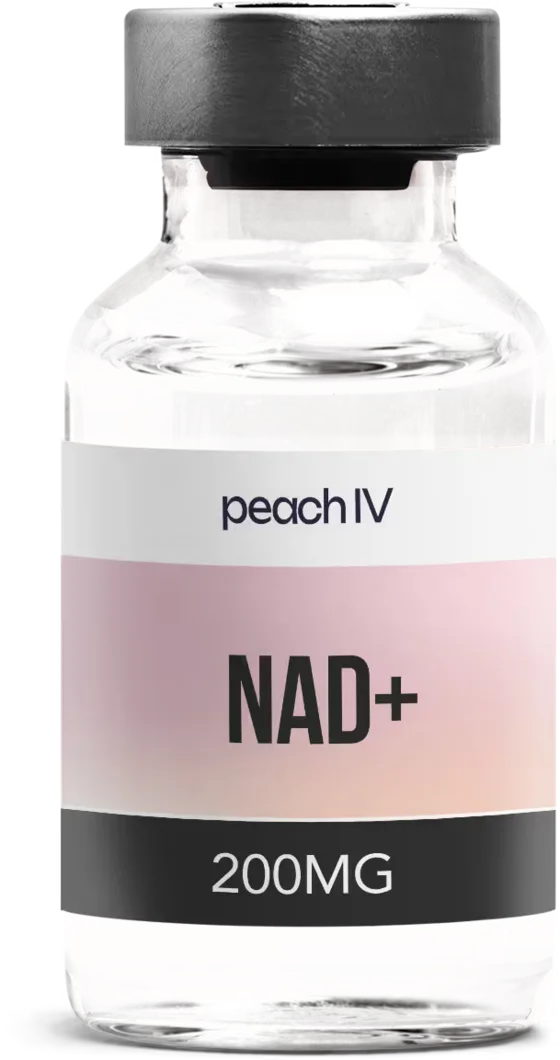
Why NAD+ matters
NAD+ (nicotinamide adenine dinucleotide) is a vital coenzyme found in every living cell, and it is central to how our bodies make energy and look after themselves. It:
- turns food into ATP, the body’s energy source
- helps power the cell’s own repair and housekeeping
- keeps essential cell processes running
But NAD+ declines with age. We hit peak NAD+ in our early 20s, and levels drop steadily after that. That drop is believed to contribute to fatigue, slower recovery, brain fog and other things we put down to getting older, and lower NAD+ has been seen in the brain, skin and muscle as we age.
That’s where NAD+ IV therapy comes in: a way to put NAD+ straight into your bloodstream to top up those dwindling levels. If you’re new to NAD+ or to IV drips, don’t worry. This guide, and the others linked from it, will help you make an informed decision.
NAD+, NADH and NR/NMN
NAD+ is a coenzyme: it helps the enzymes in your body carry out vital chemical reactions. Think of it as a key that unlocks the rest of the cell’s work, from turning nutrients into ATP to cell signaling. Without enough NAD+, cells can’t make energy efficiently or do the “housekeeping” that keeps them healthy over the long term.
NADH is the reduced form of NAD+. When NAD+ accepts two electrons and a hydrogen ion, it becomes NADH; when NADH gives those electrons away, it turns back into NAD+. This back-and-forth fuels energy production in the mitochondria.
NR (nicotinamide riboside) and NMN (nicotinamide mononucleotide) are oral supplements that the body converts into NAD+ inside cells. An IV delivers NAD+ itself; NR and NMN aim to raise your levels over time by fuelling your body’s own production, which is why they are often taken daily.
To simplify:
- NAD+ is what your cells use.
- NADH is what NAD+ becomes during energy production.
- NR and NMN are what your body uses to make more NAD+.
When people say “NAD” in general, they usually mean NAD+ and NADH working together as one system. We go deeper in NAD+ vs NADH.
What is NAD+ IV therapy?
NAD+ IV therapy delivers NAD+ straight into your bloodstream through a drip. A nurse places a small IV line in your arm and runs a solution of NAD+, usually mixed with saline, over a few hours. Because it goes into a vein, it skips the digestive system: what is in the bag is what your body receives.
An NAD+ infusion can last anywhere from 1 to 4 hours, depending on the dose and how you feel. How long the effects stay with you afterward varies from person to person; there’s more on that in the questions below. A slow drip matters: at high doses NAD+ can cause mild discomfort, so the nurse adjusts the rate to keep you comfortable. Most people relax, read or watch a movie meanwhile. It just takes a little longer than other IVs.
Why an IV, and not a pill?
An IV gives a faster, stronger boost than a supplement. NAD+ taken by mouth has to pass through your gut, where only part of it is absorbed, and then through your liver, which breaks down much of the rest before it reaches your circulation (first-pass metabolism). That is why taking more pills doesn’t get around it. An IV passes neither the gut nor the liver.
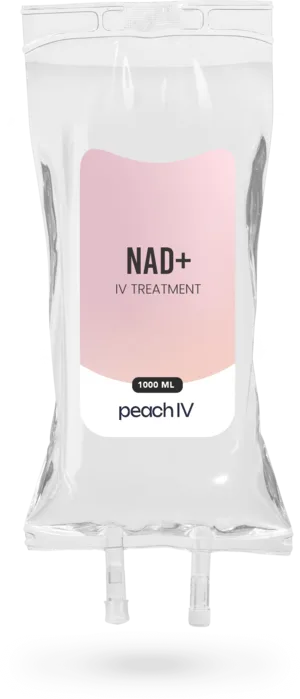
NAD+, from $495: 200mg, 500mg or 1000mg. A registered nurse brings it to your home, hotel or office. No travel fee. No service charge.
What people use NAD+ for
Because NAD+ takes part in so many processes, people often say they notice changes in energy, mental clarity and mood after an infusion. Here is what they book it for.
Energy
Many people say they notice more physical energy and stamina, and some feel it within hours of a drip.
Focus
Many people use NAD+ for “brain fog” and to help them concentrate.
Mood and stress
There is growing interest in NAD+ and the mind: it plays a role in making neurotransmitters and in the cell’s defenses against stress. Some clients say they feel calmer and sleep better after an NAD+ IV.
The long view
Researchers are studying whether keeping NAD+ levels up matters for the brain and for aging over the long term. That work is early, and nothing about it is settled.
Many of these uses are still being studied. NAD+ is not a miracle, and results vary from person to person. More in NAD+ benefits.
Signs your NAD+ may be low
There’s no simple at-home test, but because NAD+ is involved in so much, low levels may show up as:
- Fatigue. Feeling unreasonably tired and drained, even after a good night’s sleep.
- Brain fog. Trouble concentrating, forgetfulness, mental sluggishness.
- Slow recovery. Taking longer to bounce back from workouts, low endurance, soreness that lingers.
- Mood and stress. NAD+ is tied to neurotransmitters and how we handle stress, so low levels may play a part (mood has many causes).
These signs are not specific: hormones, poor sleep and much else can cause them. If several sound familiar, talk to a medical professional, who can look for other causes and discuss whether NAD+ is right for you. Some wellness clinics now measure NAD+ as part of an assessment; Peach IV doesn’t do this yet.
What to expect at an NAD+ IV
If you’re considering an NAD+ IV, you’re probably wondering what the session is actually like. A typical one:
- 0 minutes. Your nurse places the IV and starts the drip.
- 5 minutes. The NAD+ starts slowly. Your nurse watches how you feel and raises the rate to your comfort.
- 15 minutes. A comfortable rate is set. Sit back, chat or watch TV while it runs.
- 1 hour. Mid-infusion. Keep doing what you’re doing, and tell your nurse about any discomfort.
- 2 to 4 hours. Done. The IV comes out and you go about your day. Some people say they feel more energized and clear-headed soon after; for others it comes over the next day or two.
It is a low-stress, comfortable visit: think of it as a multi-hour spa treatment, at home.
Safety and side effects
Is an NAD+ IV safe? It is generally considered low-risk when trained medical professionals give it, which is how we always do it at Peach IV. Any IV can have side effects, though, and NAD+ in particular can cause temporary reactions, especially if it runs too fast.
Common side effects
During the drip, or shortly after:
- nausea (the most common)
- flushing
- head pressure or a headache
- lightheadedness or dizziness
- muscle cramps or tingling
These come from NAD+ briefly ramping up activity in your cells, and they are short-lived: once the drip slows, pauses or ends, they fade.
Where the IV goes in
As with any IV, there’s a small chance of redness, tenderness or swelling where the line went in. A little bruising or soreness for a day or two is not unusual; a cool compress can help.
Rare side effects
Very rarely, someone has a stronger reaction, such as an allergic one. That is why NAD+ should only be given under medical supervision by fully licensed people. Our nurses follow protocols to manage any reaction.
If you have a health condition (heart or kidney problems, for example), tell us before your drip, so the plan can be adjusted or a different option suggested. All of it in detail: NAD+ IV safety and side effects.
NAD+ supplements vs an NAD+ IV
Can’t you just take a supplement? There are oral options, like niacinamide, NR and NMN, and they have their place, but they differ from an IV in four ways.
- Absorption. Pills go through the gut, where only part is absorbed, and then the liver breaks down much of the rest. Plain NAD+ is a large molecule that is hard to absorb; NR and NMN absorb better, but only a fraction becomes NAD+.
- Speed. Oral boosters take days to weeks of steady use to raise your levels, and the rise is moderate. An IV raises levels within hours, which is why people say they can feel it.
- Convenience. A pill wins here. Supplements are also great for keeping levels up after an IV, and they cost less per dose, so you can find a balance that fits your health and your budget.
- Quality. Supplements vary widely and the industry isn’t tightly regulated, so choose reputable brands. An IV uses pharmaceutical-grade NAD+, prepared under sterile conditions, with a medical professional controlling the dose.
So which one? If you’re new to NAD+ and want a real jumpstart, a short run of IVs can fill your levels quickly, and supplements can then help you hold them. If you simply want everyday wellness support, you might start with supplements, exercise and diet (which also influence NAD+) and see how it goes. It isn’t either/or: they work together. How much, and how often: our full guide to NAD+ dosage and frequency.
The bottom line
NAD+ is like the cell’s currency: when levels are high, cells can do their work well; as levels drop with age and stress, many people feel it as fatigue and brain fog. An NAD+ IV is a modern way to top those levels up quickly.
It’s normal to have questions, or some skepticism: NAD+ has been called everything from a breakthrough to a reset, and not all of that hype is warranted. But the core science is real: NAD+ is fundamental to healthy cells. If you go ahead, choose a reputable provider and a clear plan (how many sessions, what dose), and pair it with good habits: exercise, for one, supports your own NAD+. Questions? Call, text or email us.

With 10+ years of experience in the medical field, he designs and supervises protocols to keep care safe, consistent, and clinically grounded.