

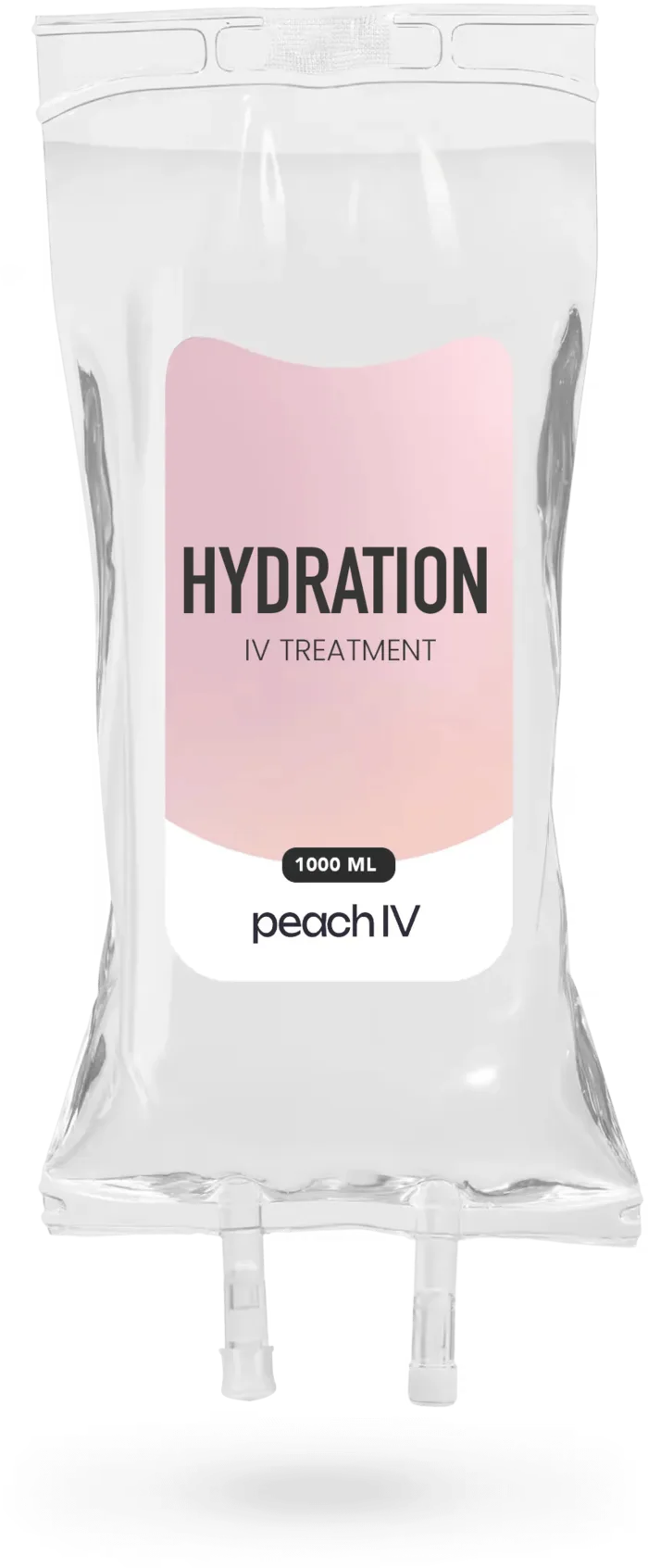
IV drips have exploded in popularity, but you’ve probably wondered just how they work. First, the meaning: IV is short for intravenous, “into a vein,” so an intravenous drip is fluid that flows slowly from a bag into a vein. How it works comes down to two things: the physics of the drip itself, and what fluids and nutrients do once they’re in your bloodstream. New to IV treatments? Start with IV Therapy 101 for the full overview.
The physics of an IV drip
Gravity and pressure
Ever wondered why the bag hangs so high on a pole? An IV drip works mainly through gravity. Hanging the bag above the spot where the IV goes in creates a height difference, and that creates pressure (hydrostatic pressure) that pushes the fluid down the tubing and into your vein. The higher the bag, the more pressure, and the faster the fluid flows.
If you’ve had an IV, you may have noticed that when you stand up, or the bag is lowered, the drip slows down, or a little blood backs up into the tubing. That’s the pressure dropping.
Tubing width and flow rate
How fast the fluid flows depends heavily on the width and length of the tubing and catheter. A physics rule called Poiseuille’s law says flow increases with a wider tube. Most tubing is a standard size, so the narrowest point, the catheter (the little part that sits in the vein), sets the pace.
Catheter sizes can be confusing: a larger number means a smaller opening, so an 18-gauge catheter is actually bigger than a 22-gauge one, and lets fluid flow much faster under the same pressure. Longer lines slow the drip down.
The thickness of the fluid matters too: thin fluids like saline drip easily, while thicker ones (blood, or certain medicines) flow more slowly.
The drip chamber and the clamp
An IV set has a few simple parts that control the flow:
- The drip chamber. Just below the bag, a clear chamber where the fluid forms visible drops: it’s where the “drip” gets its name. It lets your nurse see and count the drops to judge the rate, and it traps air at the top so bubbles don’t travel down the line.
- The roller clamp. Farther down, a small adjustable clamp that pinches the soft tubing. Tightening it slows or stops the drip; loosening it lets fluid flow. It works like a dimmer switch, giving your nurse fine control over how fast you receive the fluid.
What the fluid does in your body
That’s how the set works. So where do IV fluids go in the body, and how do they help once they’re in the vein?
Fast hydration
Fluid delivered straight into a vein hydrates you quickly. An isotonic solution (one with the same saltiness as your blood) adds to the volume of blood circulating right away. That helps keep a healthy blood pressure and blood flow to your organs, and it hydrates your tissues without upsetting your body’s electrolyte balance.
Cells and electrolytes
IV fluids like normal saline and lactated Ringer’s don’t just hydrate: they closely match the balance of salts your body keeps naturally. Saline gives sodium and water in the proportion your body recognizes as normal, adding to the fluid around your cells, which supports the exchange of nutrients and waste at the cellular level.
Meanwhile, the electrolytes help keep nerve signals, muscle contractions and other processes that depend on them working properly. That may be why many people feel refreshed right after an IV, and sometimes for a day or two afterward.
Hydration, from $355: 1000 mL of saline, brought to your home, hotel or office by a registered nurse. No travel fee. No service charge. Want vitamins in the bag? See the add-ons.
The bottom line
An IV drip is simple physics serving clear physiology. Hanging the bag high creates pressure; the tubing’s width and length and the fluid’s thickness set the flow; the drip chamber and roller clamp fine-tune it so fluid enters the vein at a controlled rate.
Once in your bloodstream, isotonic fluids add to your circulating volume quickly, support your blood pressure and blood flow, keep your electrolytes in balance, and help your cells do their work. Given by trained professionals in a clean setting, an IV is generally safe and predictable. For the risks, read IV therapy safety and side effects.

With 10+ years of experience in the medical field, he designs and supervises protocols to keep care safe, consistent, and clinically grounded.