

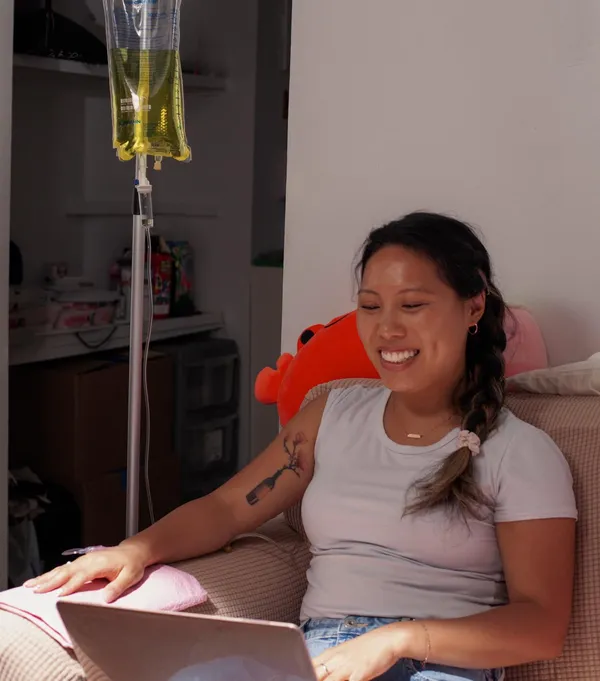
From athletes recovering after hard workouts to people who want their Sunday back after a big night, plenty of us are curious whether IV vitamin therapy lives up to the hype. This guide covers what it is, how it works, the benefits, who should (and shouldn’t) get it, safety, and cost.
What is IV therapy?
Intravenous (IV) therapy delivers fluids, electrolytes, medicines or nutrients straight into a vein through a drip. It skips your digestive system, so everything goes directly into your bloodstream, ready for your body to use.
How is that different from drinking fluids or taking a vitamin? When you swallow something, your gut decides how much passes into your bloodstream, and your body uses only a fraction of a supplement. With an IV, all of what’s infused is in your circulation.
IV therapy used to be reserved for medical needs: severe dehydration, antibiotics, correcting electrolytes. Now it’s also a wellness ritual: people book drips for a hangover, jet lag, athletic recovery, an energy lift or a healthy glow. Wellness drips usually combine fluids with vitamins (like vitamin C or B-complex) and antioxidants (like glutathione).
How does an IV drip work?
Step by step, this is how IVs work in a wellness setting:
- Preparation. A nurse cleans the spot and places a small IV catheter into a vein in your arm. We use an ethyl chloride spray to numb the area first. You might feel a slight pinch or nothing at all.
- Setup. The catheter connects to tubing that leads to the bag, hung above you. Common bags hold 500 mL or 1000 mL (1 liter): saline, vitamins, medicines or a blend, depending on your drip.
- The drip. Gravity carries the fluid down the tubing into your vein. Your nurse sets a comfortable rate and watches you throughout. You might feel a cool sensation in your arm, or notice a little more energy during or soon after.
- Finishing. When the bag is empty, the nurse stops the drip, removes the catheter, and puts on a bandage. You can usually get on with your day right away.
Most people relax while it runs: read, listen to music, nap. More in What to expect at your first session and How an IV drip works.
Types of IV therapy
Not all drips are the same: each is built for a different goal. See the common types of IV infusions, or every drip we offer.
What are the benefits of an IV drip?
People turn to IV therapy for many reasons. Here’s how a drip may help:
- Fast hydration. IV fluids rehydrate you much faster than drinking water, especially after intense exercise, illness or a hangover. Restoring fluids and electrolytes may ease headache, fatigue, dry mouth and dizziness.
- Circulation. A large infusion of fluid adds to your blood volume, so more oxygen and nutrients reach your tissues and waste is carried away. Vitamins C and B support the liver and the body’s own cleanup pathways.
- Recovery. This is where I think drips shine. For a hangover, an IV rehydrates you and can include medicine for nausea or headache, helping you feel functional again sooner: that’s our Hangover Recovery drip. After a bug with vomiting or diarrhea, rehydrating is the first step back.
- Antioxidants. Vitamin C and glutathione help neutralize free radicals, unstable molecules that can damage cells and add to inflammation.
- Medicines that act quickly. Anti-nausea or pain medicine in a drip (common in hangover or Migraine & Headache drips) reaches your bloodstream fast.
- Nutrient levels. If you’re low in certain vitamins or minerals, an IV can replace them quickly. IV iron for iron-deficiency anemia (our IV Iron Infusion) is a well-established medical use, as are vitamin B12 shots for B12 deficiency.
- Immune support. Some drips carry vitamin C, zinc and glutathione, like Immunity Support. Vitamin C has been studied for its role in the immune system; zinc matters for immunity too. Much of the evidence is still anecdotal.
- Energy and focus. B12 and B-complex help turn food into energy, and magnesium plays a role in muscles and nerves. Busy professionals and frequent travelers book Energy & Focus or Travel & Jet Lag for a lift; some clients describe a lasting boost after a series of NAD+ drips.
- Beauty. “Beauty” drips like Beauty, Hair, Nails pair hydration with vitamin C or glutathione. Good hydration plumps the skin, and some people notice a glow. A single drip won’t change your skin for good.
- A sensitive stomach. For people who can’t absorb vitamins through the gut (after gastric bypass surgery, or with Crohn’s disease), IV nutrition is a clear medical use. Someone with a very sensitive stomach may simply prefer it to pills.
Keep expectations realistic. The biggest proven benefit of an elective IV is hydration; the rest varies from person to person. If you’re trying to fix poor sleep or diet with a drip, the effect may be short-lived unless you address those too.
More in What are the benefits of IV drips? and IV therapy vs oral supplements.
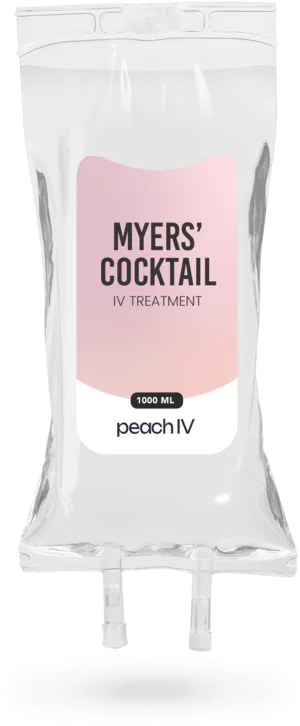
Myer’s Cocktail, from $295: the classic vitamin drip, brought to your home, hotel or office by a registered nurse. No travel fee. No service charge.
Who can get IV drips?
Generally healthy adults are the best fit. If you lead an active life, travel often, or have a nightlife that leaves you drained the next day, an occasional drip to recharge may suit you. People who tend to book them:
- anyone with a hangover or a bug
- busy professionals and students
- frequent travelers fighting jet lag
- wellness-minded adults
- older adults with nutrient gaps
When IV therapy isn’t appropriate
Elective drips are not recommended, or need real caution, for people with:
- heart conditions
- kidney disease
- liver disease
- allergies to any IV ingredient
Anyone with a serious medical condition should have a thorough consultation first, and talk to their doctor. A good provider has a physician who sets the protocols and a nurse who checks your vital signs and asks health questions before starting, to catch anything that rules a drip out. That’s why we send only registered nurses.
How long does an IV drip take?
- Setting up: about 15 to 20 minutes.
- The drip: about 30 to 40 minutes.
- Add-ons: most add 5 to 15 minutes more. NAD+ takes longer.
- Unhooking: about 5 to 10 minutes.
How fast does it work?
Because the drip goes straight into your bloodstream, many people start to feel it during the infusion. Not every effect is immediate: some only follow once your body has put a vitamin or nutrient to work. Clients often notice a cool feeling in the arm, or a mineral taste, while it runs, and many feel better by the time the nurse leaves.
How long do the effects last?
It depends. The fluid itself usually keeps you hydrated for a day or two, unless you lose fluid again (a hard workout, heavy sweating). Raised vitamin levels usually last a few days, as your body uses what it needs and clears the rest. Minerals like magnesium and zinc may stay longer, because the body stores them or builds them into enzymes, and some people say they feel the lift from NAD+ for a couple of weeks. That’s why many people repeat a drip every few weeks. More in How long does IV therapy last?
Side effects and safety
IV therapy is generally safe when given by trained professionals, but like any medical procedure it carries some risk.
- Common: minor pain or bruising, a cool sensation, local irritation.
- Less common: infiltration (the IV slipping out of the vein), an allergic reaction, fluid overload, an electrolyte imbalance or strain on the organs, vein irritation (thrombophlebitis).
- Rare but serious: infection, an air embolism, a blood clot.
Healthy adults generally tolerate IV vitamin therapy well, and serious complications are very uncommon, especially with single sessions. The key is a qualified nurse following proper protocols. More in IV therapy safety and side effects.
Before and after your drip
Before: drink water, eat a light meal, skip alcohol and too much caffeine, wear something that leaves your arm easy to reach, and tell your nurse about any recent illness or medication. After: keep the bandage on for at least half an hour, keep drinking water, and take it easy for a few hours. A little bruising or soreness? A cool compress helps; it usually clears within a day or two.
Finding the right IV therapy
IV therapy is offered in medical clinics and hospitals, medical spas, IV bars and mobile services like ours, and the differences can be big. Wherever you go, look for credentials, cleanliness, clear protocols and medical oversight. A reputable provider is open about how it keeps you safe.
What does it cost?
It depends on the drip and where you get it. Ours start at $285: see every drip and price on all treatments. No travel fee. No service charge.
The bottom line
IV therapy has gone from hospital-only to a wellness ritual that supports hydration, recovery and nutrient levels quickly. Given by qualified professionals in a safe setting, it can help you feel better after fatigue, dehydration or a hard week. It works best alongside good food, sleep and water, with a provider who has real medical oversight.

With 10+ years of experience in the medical field, he designs and supervises protocols to keep care safe, consistent, and clinically grounded.