

Both an IV drip and a pill can get vitamins and minerals into your body, but they work very differently. A drip puts nutrients straight into your bloodstream; a pill goes through your digestive system first. Here is how they compare on absorption, speed, convenience, results and cost. New to IV therapy? Start with IV therapy 101.
Absorption
The biggest difference is how much of the dose your body actually gets. A drip skips digestion entirely, so the vitamins go straight into your bloodstream and absorption isn’t a factor.
A pill has to pass through your stomach and intestines, and what’s absorbed goes to your liver before the rest of your body (“first-pass metabolism”). Along the way, part of the dose is broken down or never absorbed, so your body takes in only a share of what you swallowed. In short, far more of an IV dose reaches your bloodstream.
Speed
Nutrients from a drip are in your bloodstream as it runs, so some people feel a difference the same day. A pill takes a few hours to digest and absorb, and you usually need days or weeks of steady use to notice a change. For a quick lift, a drip is the fast option; for steady, long-term support, pills are easier and cheaper.
Convenience and comfort
For everyday use, pills win. They take seconds, need no equipment or medical oversight, are sold everywhere, and involve no needle.
A drip takes more: a needle, which can leave a small bruise, and time. The drip itself runs about 30 to 40 minutes, plus 15 to 20 minutes to set up. We come to your home, hotel or office, so you can work or rest through it, but it’s still more to fit in than a pill.
Which works better?
Both can support your health; which one makes sense depends on your situation.
If you have a diagnosed deficiency, or a condition that makes absorbing nutrients hard (a digestive disorder, or after some surgeries), your doctor may choose an IV or an injection over pills, because it delivers a higher dose directly. IV vitamin C, for example, reaches blood levels far higher than vitamin C by mouth.
Some situations favor a drip outright:
- When you can’t keep anything down. If you’re too nauseous to swallow a pill with water, pills aren’t an option. That’s when people book Food Poisoning & Nausea or Hangover Recovery, which add anti-nausea medicine to the fluids.
- NAD+ and glutathione. Much of an oral dose is broken down in digestion before it reaches your bloodstream, which is why people choose NAD+ and glutathione by IV.
For everyday wellness, though, pills are usually enough. For healthy people, a daily multivitamin and a balanced diet keep vitamin and mineral levels where they should be. Think of a drip as a targeted boost for particular days, and pills as your everyday support.
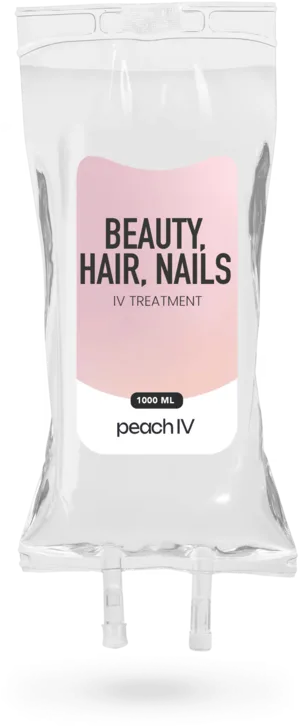
Beauty, Hair, Nails, from $285: biotin, vitamin C and B-complex in 1000 mL of saline, the drip version of a hair-skin-nails vitamin, brought to you by a registered nurse. No travel fee. No service charge.
Cost
A drip costs much more than a bottle of vitamins. Ours start at $285, and the largest NAD+ dose is $995. A month of everyday supplements costs a small fraction of that. Over the long run, a daily supplement routine is far easier on your budget than regular drips, and taking a pill needs no appointment. Pills are the economical choice for most people; a drip is a bigger investment for a more intensive treatment.
When to choose each
A drip may be better for: real dehydration (a hangover, vomiting), recovering from an illness or hard exertion, a deficiency your doctor wants corrected quickly, or digestive problems that get in the way of absorption. Also for NAD+ and glutathione.
Pills may be better for: everyday maintenance and avoiding small shortfalls over time. They cover most people’s daily needs, with no needle.
Whichever you choose, it’s wise to check with a healthcare professional first: they can pinpoint what you actually need.
Pros and cons at a glance
IV drips
- Pros: the whole dose reaches your bloodstream; some people feel it the same day; can be tailored with add-ons to your goal; helps when you can’t absorb or keep things down.
- Cons: a needle, with a small risk of bruising, vein irritation or, rarely, infection (see IV therapy safety); a higher price per treatment; it takes time and a professional.
Pills
- Pros: quick and easy every day; widely available; affordable over the long term; good for maintaining your levels; no needle, and generally safe when taken as directed.
- Cons: you absorb only part of the dose; some can upset your stomach or interact with medicines; it can take weeks to notice anything; quality varies by brand.

With 10+ years of experience in the medical field, he designs and supervises protocols to keep care safe, consistent, and clinically grounded.